What's Next!
Wickedness is not an inherent trait, but an accusation made by the powerful against outcasts and the defenseless. When we stop dividing the world into good and evil, we begin to see one another as whole — capable of both, yet defined by neither.

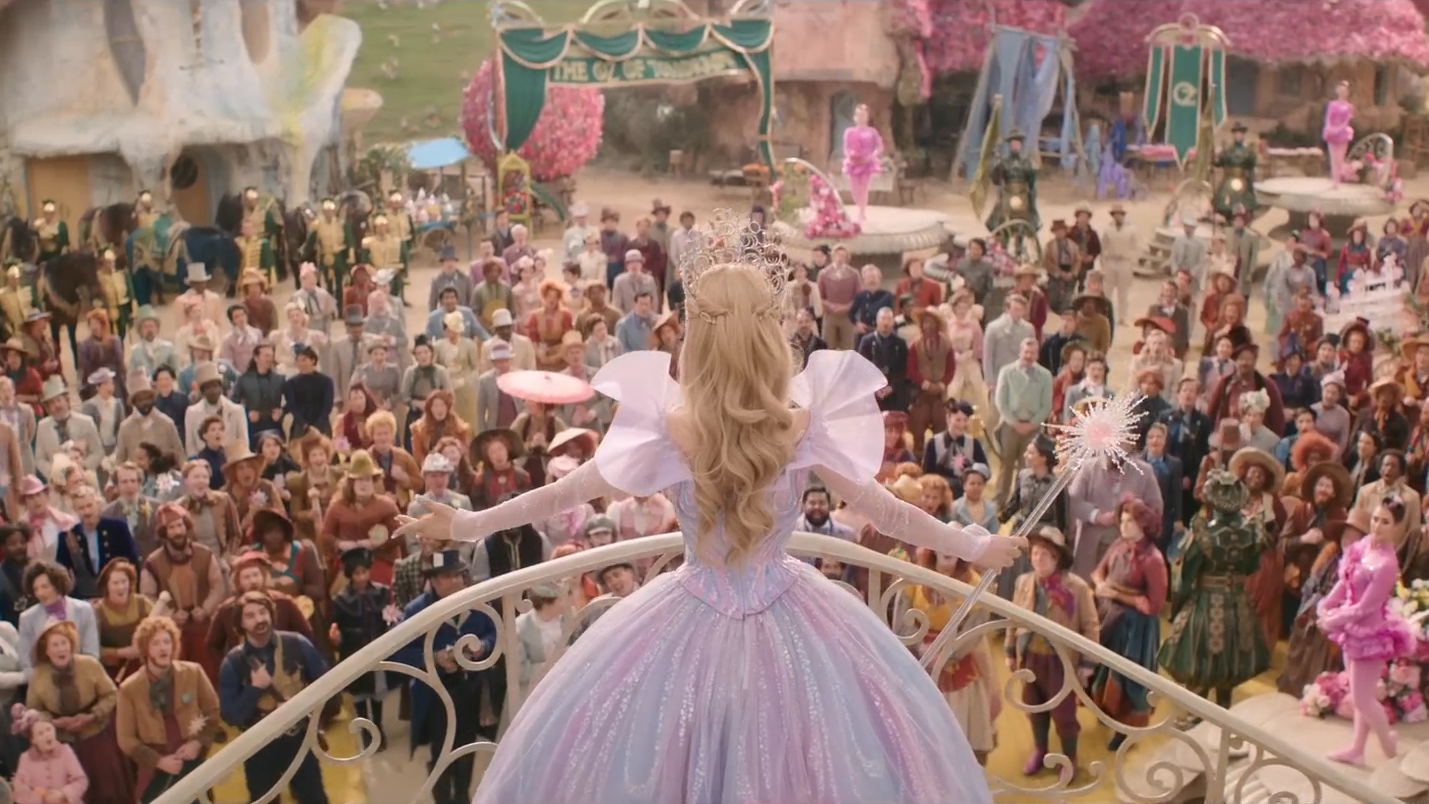
Through 2025, our imaginations at The Wicked Truth have been fueled by the paradigm-shifting story of the life and times of Wicked Witch of the West. The release of the two-part film adaptation of the musical allowed us to wander back and forth between the land of Oz and our own world to find new ways of dealing with the fear and wonder, danger and beauty in our lives.
As we’ve engaged Elphaba’s story, our eyes have been opened to the dangers of dividing the world up into good and evil. Remember the question that launched the musical: “Are people born wicked or do they have wickedness thrust upon them?” We’ve discovered with Elphaba and Glinda that wickedness is not an inherent trait, but an accusation made by the powerful against outcasts and the defenseless. Under those circumstances, claiming goodness for oneself can be as self-serving as leveraging accusations of wickedness against another.
As the story ends, we see Glinda addressing the crowd that has gathered to celebrate the death of her friend, Elphaba. As she does, we see something amazing happen: the Animals are coming out of hiding! The reign of the Wizard has ended, and so has their fear of being silenced, imprisoned, banished, or killed.
“Friends,” Glinda says, and pauses: “because I don’t see any enemies here.”
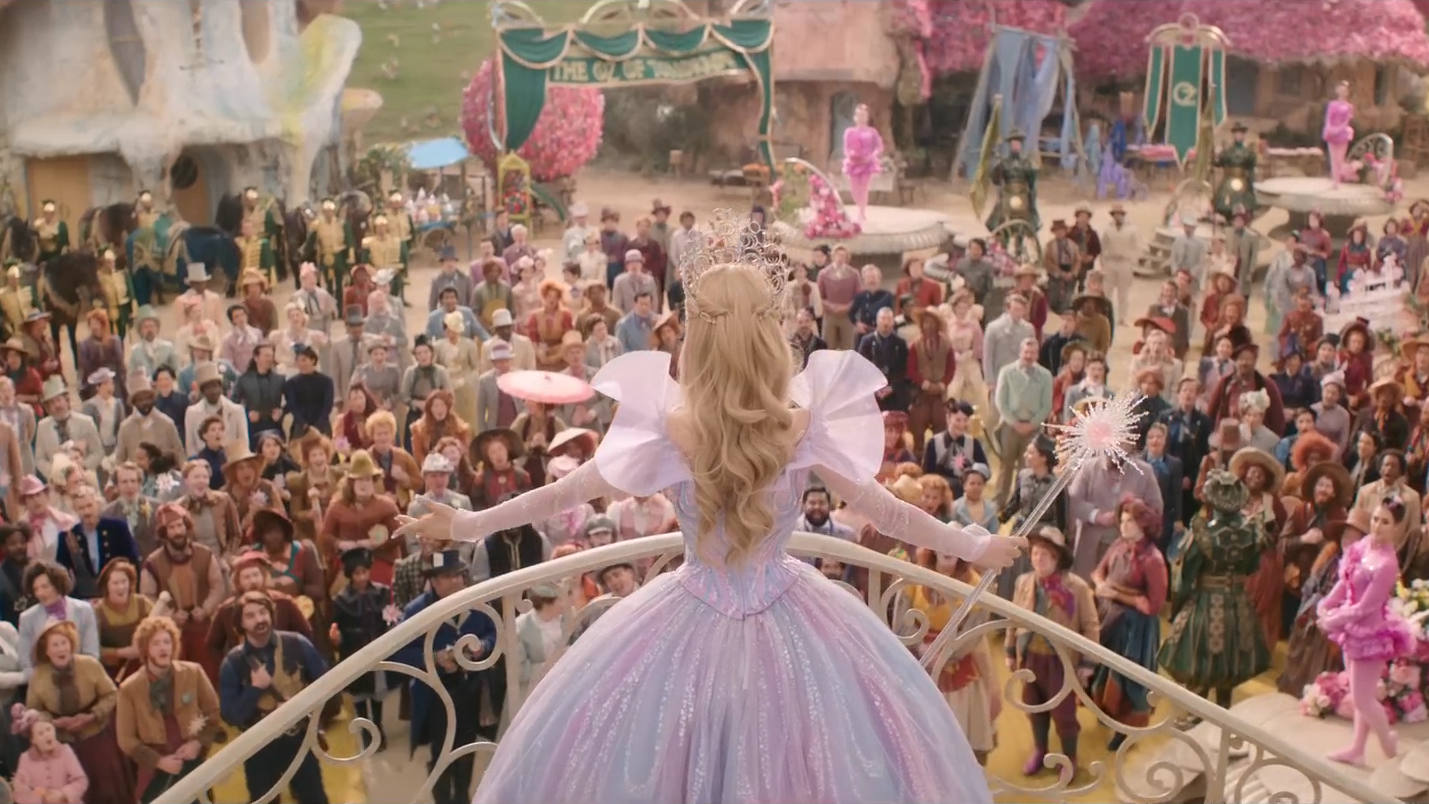
This is worth us pausing over, too. The people of Oz had been taught to hate and fear the Animals, and the Animals had been so afraid that they were leaving Oz for unknown lands. Yet there is no hate and fear now: The Animals and the people are mixed in together. The good/evil divide has melted into a gathering that shares space together, as if it is the most natural thing to do – because it is.
I have loved this story since I first saw it in 2005 because of how it dramatizes the complicated, messy search for the truth about good and evil. As I’ve revised the last chapter of my book, I have given a central place to an insight from the Russian dissident Aleksandr Solzhenitsyn. Here’s what he wrote after serving in the Soviet army in World War II, and realizing that war and violence make mockery of “us vs. them” thinking:
Gradually it was disclosed to me that the line separating good and evil passes not through states, nor between classes, nor between political parties either—but right through every human heart—and through all human hearts. This line shifts. Inside us, it oscillates with the years. And even within hearts overwhelmed by evil, one small bridgehead of good is retained. And even in the best of all hearts, there remains… an un-uprooted small corner of evil.
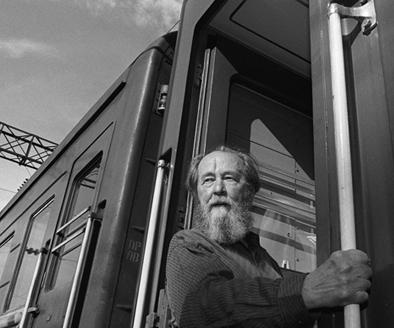
I believe with Solzhenitsyn that no one is perfectly good or irredeemably evil. No one. This makes navigating the dangers and managing our fears a bit more complicated than we would like. But as Wicked: For Good ends, I think that Glinda is not afraid of this complexity or the challenges of being a truly good leader. In fact, she makes a promise to the people and Animals of Oz:
“We have been through a frightening time. And there will be other times and other things that frighten us. But if you’ll let me, I’d like to try – to help, to change things. I’d like to try to be… Glinda the Good.”
But how will she manage, we wonder? What will Glinda do “to help, to change things”? What can she do to heal Oz from the violence of the Wizard’s reign? Can she be a new kind of leader for all the people, Animals, witches, and other creatures of Oz?
This year, I’d like to invite us to journey into an imagined future for Oz where no one lives in fear of violence. For Glinda to succeed in changing things for the better, she will need to follow the pattern for change that peacebuilders have discovered. When we imagine Oz’s future we will discover our dreams for our future. What path will we follow?
What to expect over the next 6 months:
- The launch of our podcast, Third Things First, which features interviews with peacebuilders who have also discovered what a powerful tool art can be.
- Excerpts from the revision of The Wicked Truth, with a study guide for peacebuilding
- A June release of The Wicked Truth second edition E-book, with online and in-person launch events
As we seek life without the false divide between good and evil, I hope we’ll discover the strong ties that bind us to each other and to the natural world. I’ll be inviting us to listen to voices from across time and traditions, voices that draw us into a way of seeing which creates hope for the flourishing of all people, good and wicked alike. Don’t be surprised if you find me musing on the Tarot, or the Enneagram, or magic, or the mysteries of physics and the quantum world—Wisdom, I’m learning, comes from the most unexpected places!
For now, allow me to leave you with the familiar words of the poet John Donne, No Man Is An Island, published in 1624 and inspiring a vision of our shared humanity ever since:
No man is an island,
Entire of itself.
Each is a piece of the continent,
A part of the main.
If a clod be washed away by the sea,
Europe is the less.
As well as if a promontory were.
As well as if a manor of thine own
Or of thine friend's were.
Each man's death diminishes me,
For I am involved in mankind.
Therefore, send not to know
For whom the bell tolls,
It tolls for thee.