Marking the Unmarked: Racial Healing in Enslaved Burial Grounds
Julia Robinson Moore tells her story of how a childhood brush with the Ku Klux Klan left her with searing questions about religion, race, and violence. Now, her peacebuilding work brings Black and White descendants together around the neglected grave sites of the enslaved.

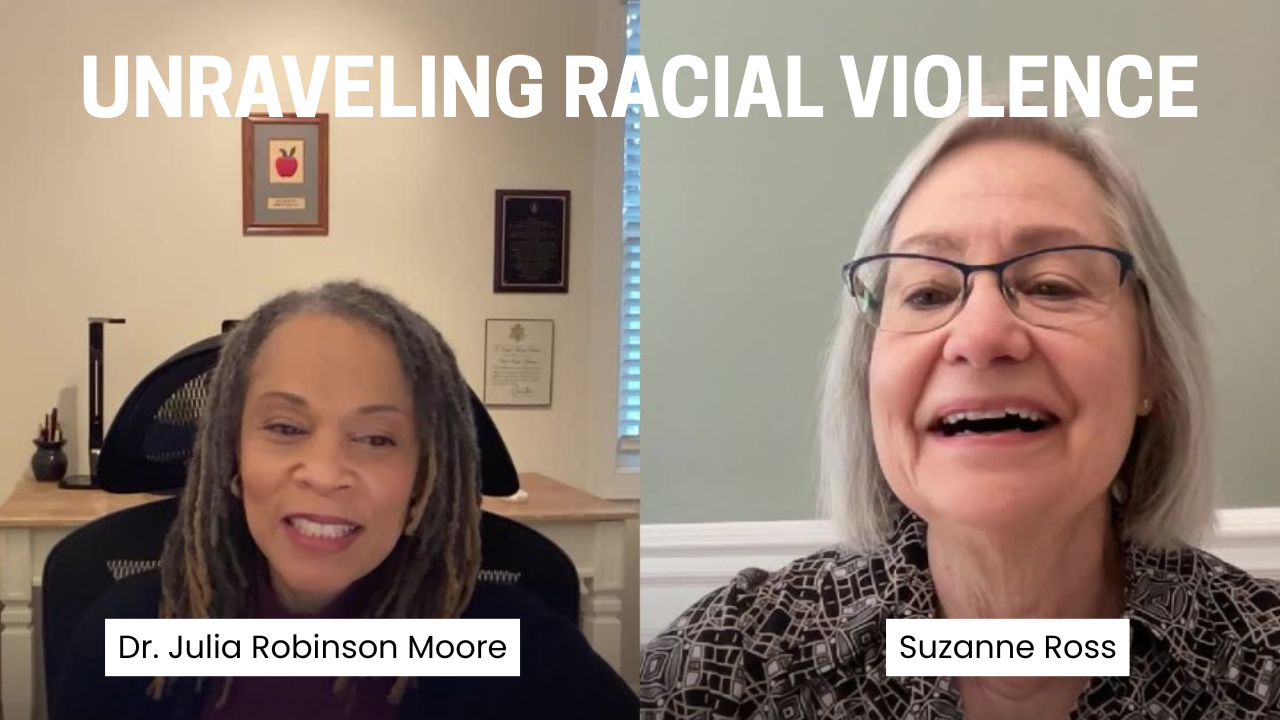
In conversations about America’s racial divide, it can feel as if our only choices are to minimize the past or to stay stuck in its pain. In this week’s episode of Third Things First, Rev. Dr. Julia Robinson Moore offers a different path that begins, quite literally, in the ground beneath our feet.
Julia is an ordained Presbyterian pastor and associate professor of religion at UNC Charlotte. Her work focuses on the history of lynching, racial violence, and the churches that stood nearby while it unfolded. While researching a book on Presbyterianism in Charlotte, she began to notice something hiding in plain sight: segregated burial grounds on colonial-era church properties where enslaved people were buried in unmarked graves, often just steps away from manicured cemeteries for white congregants.
In the episode, Julia tells the story of how a childhood brush with the Ku Klux Klan left her with searing questions about crosses burned “in honor of Jesus.” Those questions carried her into scholarship on lynching and, eventually, into peacebuilding work that brings Black and White descendants together around these neglected grave sites.
While being unapologetically faith-informed, Julia’s approach is practical and embodied. Julia and her team spend months building what she calls the “emotional capacity” of those who participate in their work. Participants learn how the right hemisphere of the brain reacts when flooded with fear, anger, or shame, and they practice spiritual disciplines that invite God into both their joyful and painful memories. Only after long practice do these participants gather in mixed groups to share stories, walk the land, and begin to imagine memorials together.
Julia describes standing on an enslaved burial ground and feeling the land “speak” of the human lives that deserve recognition and honor. That image has stayed with me. These sacred spaces are not just about the past; they are a concrete “third thing” that draws former rivals into shared work: clearing brush, reading archives, tracing family lines, and designing a place where everyone can remember together.
One such place is being built in the Charlotte area. After nearly three years of collaboration, Providence Presbyterian Church and Matthews-Murkland Presbyterian Church have co-designed a memorial to “mark the unmarked” graves on church property. The design has been approved, and a structural engineer is ready to begin, but they still need to raise about $55,000 to bring the memorial to life.
If you’re interested in how faith, neuroscience, and community organizing can converge to interrupt cycles of mimetic rivalry around race, I think you’ll find this conversation both sobering and hopeful. And, if you’re able to support this kind of work, please considering helping Julia and Moore Grace Ministries make this memorial a reality!
🎧 Watch the episode: https://youtu.be/8v9x-eYh7oo, or listen at Spotify or Apple Podcasts!
🌿 Learn more or support the memorial work: https://www.mooregraceministries.com
... Are there unmarked or neglected sites in your own community whose stories still need to be told?
... When you think about the racial history of your own town, what “unfinished conversations” come to mind that people still avoid?
... Have you ever visited a cemetery or memorial that changed how you understood your community’s past? What was that experience like for you?
... What spiritual or contemplative practices help you stay relational when you’re angry, afraid, or grieving in hard conversations?
... After hearing Julia’s stories, what “third things” (art, spaces, projects) could help build a shared future where you live?