Do You Believe in Wicked Witches?
If we can put our fear aside, we can ask the questions fear keeps us from asking.

Elphaba is shattered after her audience with the Wizard. The truth of the Wizard’s cruelty towards the Animals is almost more than she can bear. In a heartbeat, she decides to fight back. No doubt, Dr. Dillamond’s words echo in her ears: As he was being dragged out of his classroom by the Wizard’s agents he said, “Listen to me! You are not being told the whole story!”
Elphaba knows the whole story now, and she is not going to cooperate with the Wizard or keep his plot against the Animals secret. To prevent Ozians from believing Elphaba, Morrible does what damage control experts do quite well: discredit or silence the voice of truth. As Elphaba escapes from the Guards, Morrible broadcasts her message:
Citizens of Oz, there is an enemy that must be found and captured! Believe nothing she says. She's evil… Her green skin is but an outward manifestation of her twisted nature! This distortion – this repulsion – this – Wicked Witch!
We now have our answer to the question an anonymous Munchkin asks Glinda at the beginning of the movie: “How does wickedness happen?” Glinda has her answer, too. Wickedness is an accusation hurled by frightened leaders to bring down truthbearers. A Wicked Witch is not something Elphaba is; it’s a story told about her by someone who feels threatened by her truth. As Wicked: Part 1 draws to a close, we see the story for the lie it is. Will the Ozians be able to recognize the lie? Or will they become afraid of Elphaba, never learning the truth about the less-then-wonderful Wizard of Oz?
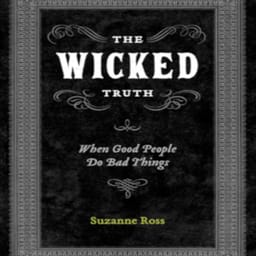 Suzanne Ross
Stephen Schwartz, the composer and lyricist for Wicked, hoped that audiences would see the Wizard and Morrible as types of leaders in our own world, ruthlessly keeping us from knowing the whole story. When I showed Stephen the first draft of my book, I hadn’t made those connections explicit — but he encouraged me to do so. He especially hoped I would write about the Wizard as representing leaders who are willing to use violence, scapegoating, and fear to maintain their hold on power.
I did revise my draft to include leaders like Saddam Hussein and Hitler, and to draw connections to colonial Great Britain’s occupation of India. I did not make a direct connection to the United States. Not that there wasn’t opportunity! I was writing between 2005 and 2007, in the middle of the “war on terror,” when Islamic terrorists and Osama bin Laden were our “wicked witches.” Glinda begins Act 2 of the musical (which opened in 2003) with this line, hard to miss as a direct commentary on those times: “As terrifying as terror is, let us put aside our panic for one day and celebrate!” It’s a very clever allusion to how powerful figures, then and now, keep us from questioning their motives through terror and entertainment.
To follow Stephen Schwartz’s advice more closely I’m doing two things: 1) I’m revising The Wicked Truth to include a discussion guide for local communities who want to dig for truth beneath the lies sowing division and conflict, and 2) I’m using this website to provide a forum to examine current events for lies, scapegoating, and fear-mongering.
Right now, in the United States, lies and fearmongering are the tools of the administration. They don’t call truthbearers “wicked witches,” but please don’t miss the connection: Fear against immigrants is enflamed by labeling them an existential threat to our safety, our identity, and our economic future. This is what appears on the ICE website, a blatant attempt to generate fear:
ICE officers and agents are on the streets every day, prioritizing public safety by locating, arresting and removing criminal aliens and immigration violators from our neighborhoods.
As a person whose metropolitan area is currently filled with ICE agents, I feel the fear this administration wants me to feel. Their presence deters us from digging for the truth. What’s more, those in power doubled down on the fearmongering by referring to peaceful protestors as “terrorists” and “America-haters.” All of it is designed to keep citizens from seeking a truth that’s deeper than the official story. But we won’t learn the whole story — whether our public safety really is under threat from lawless immigrants, or more from the unlawful deployment of federal agents in our cities — until we stop being afraid.
 The Editors
René Girard commented on the difficulty of learning the truth during the European witch hunts between the 14th to 18th centuries, and most famously in Salem, Massachusetts in 1692. Conventional wisdom has it that science revealed the truth, that witches could not cause droughts, plagues or poison wells, and so we stopped hunting for witches. But the reverse is true: once we stopped being afraid of witches, we could study droughts, plagues and poisoned wells to find their real, natural causes. Girard explains, "The invention of science is not the reason that there are no longer witch-hunts, but the fact that there are no longer witch-hunts is the reason that science has been invented.” (The Scapegoat, 1982, trans. Yvonne Freccero, p.204)
 Suzanne Ross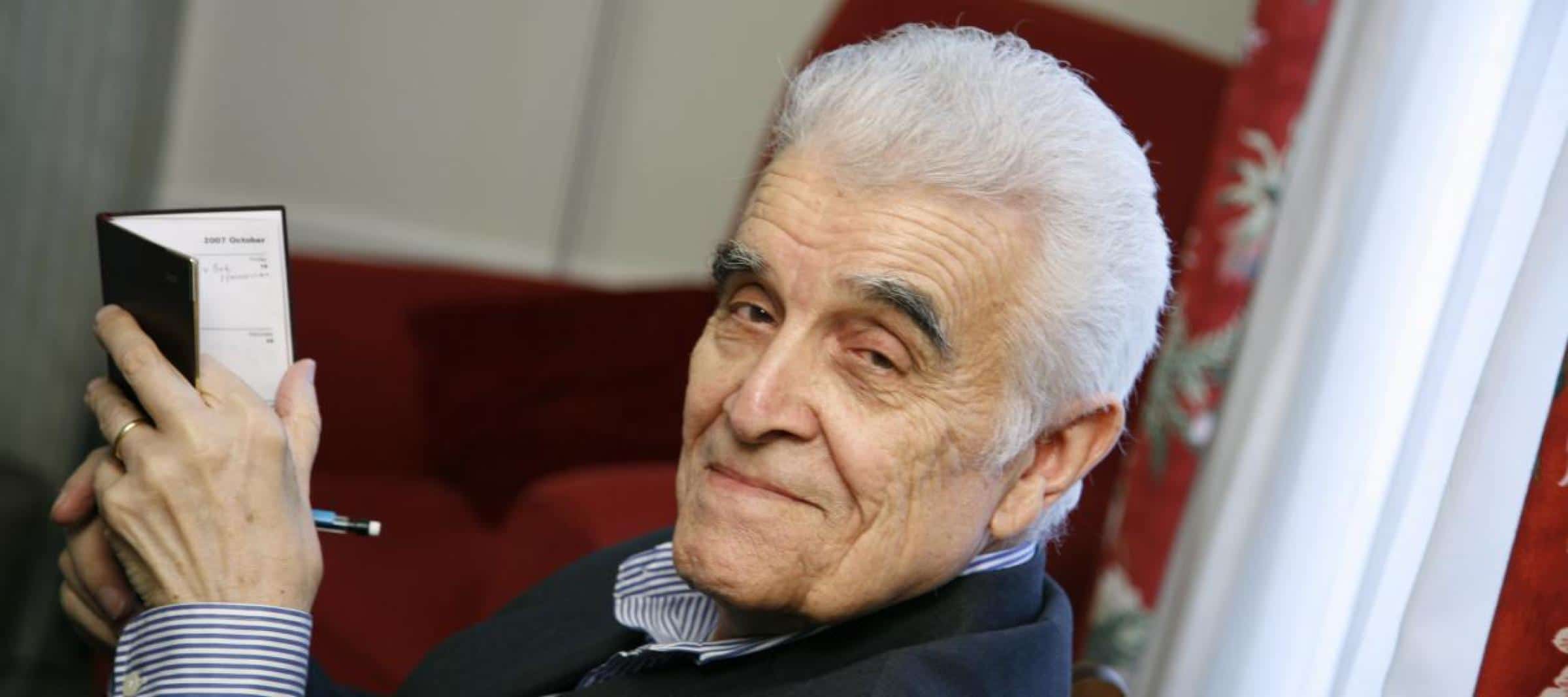
So, friends, to learn the whole story of what is happening in our cities, the first step is to calm our fears. When we are afraid, we may go along with actions that we normally consider amoral or illegal — even burning someone’s auntie at the stake, or falsely arresting and imprisoning our neighbors — just to feel safe again. But if we can put our fear aside, we can ask the questions that fear keeps us from asking:
Who is telling us to be afraid of immigrants? Is it the whole truth?
What do they have to gain by our fear?
What questions are they afraid we will ask if we are not afraid?
Do you believe in wicked witches? I hope you don’t, and I hope you will always question the motives behind those in power who are making you afraid.
Till next time, remember to always mourn the wicked. It’s what good people do.