
Betrayal, the Brain, and Nonviolent Action in a Polarized America
If you’ve been feeling betrayed by political leaders, overwhelmed by bad news, or stuck in anger, this week’s Third Things First episode is for you.

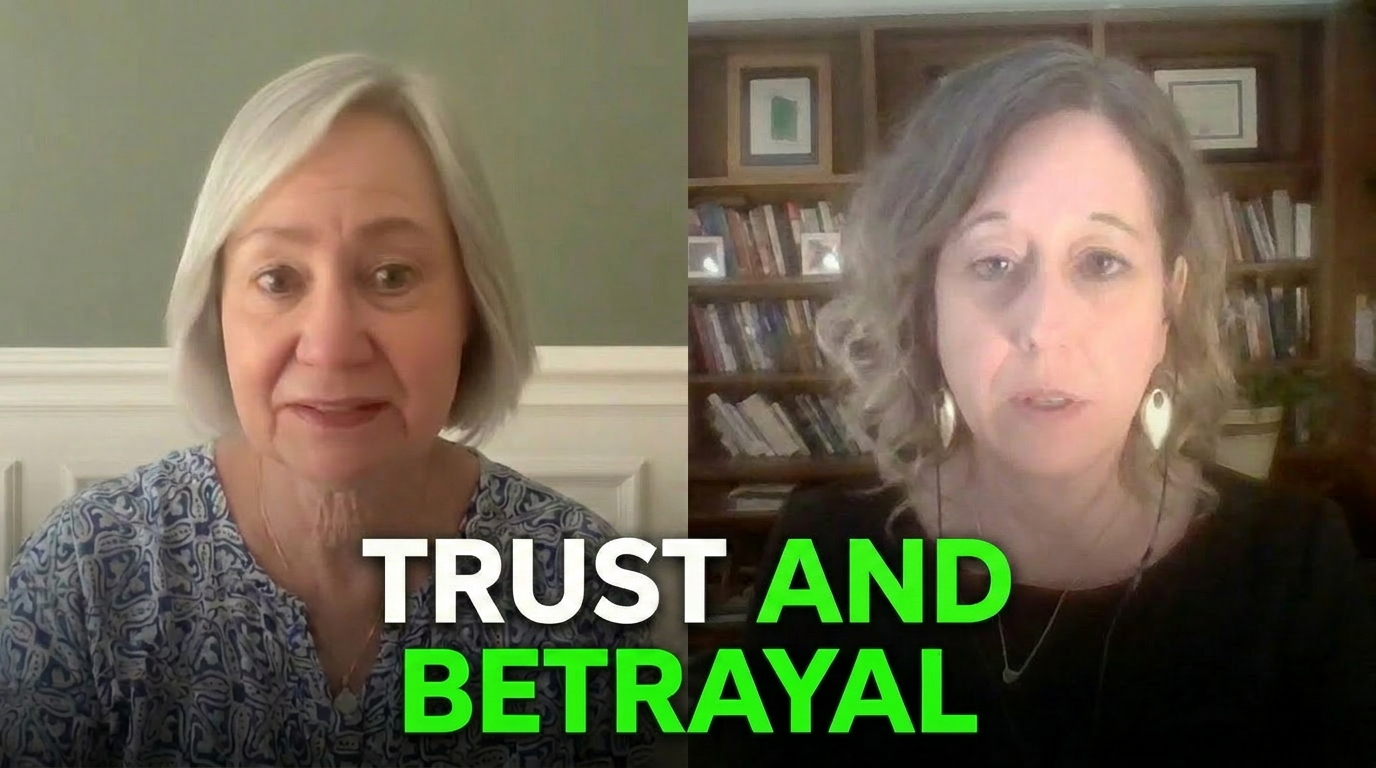
For this episode of Third Things First, I sat down with Dr. Gena St. David, a psychotherapist, seminary professor, and author working at the intersection of brain science, Christian theology, and nonviolence. Gena's become a wonderful friend of mine over the past couple of years, and I wanted to talk with her about what’s happening in our brains when we feel betrayed and how we can move toward nonviolent action without burning out or turning on each other.
From a neuroscience perspective, high‑stress conflict pushes us down into our “lizard brain,” the part of the nervous system that’s constantly asking, “Am I about to eat or be eaten?” When our brain decides we’re in danger, it turns down the upper regions responsible for empathy, creativity, and long‑term values, and floods our system with the felt need to fight, flight, or freeze (or, Gena adds, to "fawn" or "fake it.")
Betrayal is a special kind of threat. It doesn’t just say, “You weren’t safe”; it also whispers, “You were wrong to think you were safe.” That double wound can leave us feeling like we can’t trust others or ourselves.
Gena offers some insight to keep us grounded when experiencing a threat-response, especially if we've been wounded in the past:
Our bodies often react to present cues based on past threats.
The physiological fear is telling us something real, even if the meaning we attach to it is off.
When we talk it through and discover the truth, trust can grow even through misperception.
From there, our conversation widens to include political and systemic betrayal: the hidden cruelty of factory farms and animal research, immigration policies that tear families apart, the climate emergency, and the ways many of us feel duped or abandoned by political leaders. Gena draws on her research with nonviolent practitioners around the world to suggest a way through:
- Trust your body as an early‑warning system, without believing every story it tells.
- Ask what this reminds you of from your past, and what lessons still need integrating.
- Run small experiments in relationships and systems to test where trust is deserved.
- Move through grief, à la Elisabeth Kübler‑Ross: allow yourself to process the stages of denial, bargaining, anger, depression, and finally acceptance, rather than trying to jump straight to action.
- Stay rooted in your “upper brain”, so your activism remains aligned with your deepest values and doesn’t mirror the violence you oppose.
We also connect all this to Wicked. Elphaba defiance in "Defying Gravity" feels eerily resonant right now. There’s real energy in that anger that many of us probably sympathize with. But as Gena says, perhaps our goal as peacebuilders should not be to “move out of” those feelings so much as to move through them, letting grief do its work until a cleaner, nonviolent energy emerges.
If you care about nonviolent resistance, trauma‑informed politics, and the nitty‑gritty of how to keep your nervous system grounded in a polarized age, this episode on betrayal, the brain, and peacebuilding is worth your time.
📺 Watch now: https://youtu.be/lJ52chZ3ddk

Buy Gena's book, The Brain and the Spirit, and connect with her on Substack for more neuroscience applied to peacebuilding, as well as updates on her new book, The Nonviolent Brain!
 Gena St. David